
About
John Robbie
A life connected to South Africa.
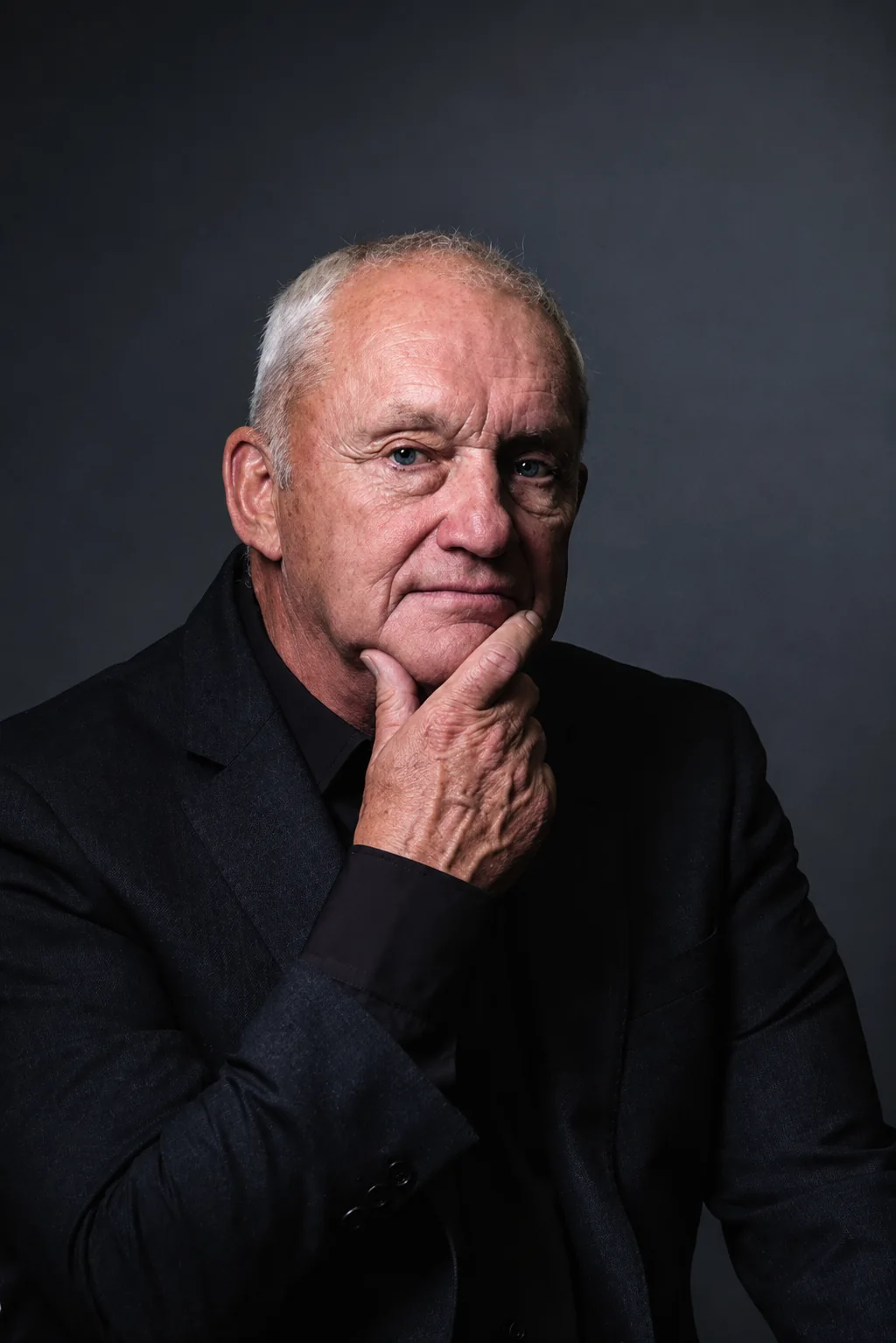
About John Robbie
John Cameron Robbie was born in Dublin, Ireland, on 17 November 1955. His love of rugby came from his Welsh grandfather and began a journey that would take him from schoolboy rugby in Dublin to international rugby, the British & Irish Lions and, ultimately, a new life in South Africa.
A scrumhalf at High School Dublin, John was part of the team that secured a historic Leinster Schools Cup victory. He continued his rugby career at Trinity College Dublin, where he was elected the university’s youngest-ever rugby captain in 1976. That year, Trinity enjoyed its most successful season in more than 60 years, while John earned his first international cap for Ireland against Australia at the age of 20 years and three months.
After graduating with a BSc Honours degree, John continued his studies at Christ’s College, Cambridge. He captained the Cambridge Light Blues and scored 17 points in their victory over Oxford in the 1978 Varsity Match. He also represented both Irish and British university teams, captained the Barbarians and, through his close friendship with the late Eddie Butler, played for the celebrated Pontypool side in the Welsh Cup.
Despite breaking his leg in 1977, John went on to earn nine caps for Ireland and was selected for the 1980 British & Irish Lions tour of South Africa. He contributed to the Lions’ only Test victory over the Springboks during that series.
After university, John joined Arthur Guinness & Sons while continuing to play rugby at the highest level. He captained Greystones Rugby Club and the Leinster provincial team, leading Leinster to two championship victories.

His decision to tour South Africa with Ireland in 1981 cost him his job. It also changed the course of his life. John emigrated to South Africa, the country he would ultimately choose as his own, and became a South African citizen following the democratic elections of 1994.
In South Africa, he played club rugby for Wanderers and made 83 appearances for Transvaal. He appeared in two Currie Cup finals and two Lion Cup finals, was selected on the Springbok bench four times and played for the Springboks during the 1985 internal tour, although no official caps were awarded.
In 1987, John was named one of South Africa’s five players of the year. He retired from rugby the following year, bringing to a close an exceptional playing career. His sporting ability extended beyond rugby: he also won the South African Superstars title, a multidisciplinary competition testing competitors across several sports and athletic events.
In 1986, while still playing rugby, John joined Radio 702 as a sports reporter. It was the beginning of a broadcasting career that would span 30 years and give him a front-row seat to some of the most important sporting, political and social developments in modern South African history.

John was twice named South African Sports Journalist of the Year—once for radio and once for television. His career later expanded into current affairs, where he hosted programmes including Talk at Ten and The Breakfast Show. He presented the breakfast programme for 17 years, winning Best Morning Host and Best Morning Show on multiple occasions while helping to achieve substantial audience and revenue growth.
For a time, John co-hosted the programme with Dan Moyane in what was then South Africa’s first multiracial breakfast show. Together, they became affectionately known as ‘The Cereal Killers’.

Over three decades at 702, John interviewed almost every leading decision-maker in South Africa. He became known for his professionalism, integrity and fairness—as well as his willingness to ask difficult questions when they needed to be asked.
Archbishop Desmond Tutu once told John that his programme was not simply a radio show, but ‘a mission’. Nelson Mandela once told him to ‘shut up’, before following the remark with a hearty laugh. Eugene de Kock later revealed that he had once been instructed to kill John because of the influence of his programme.
John was also among the first prominent South African broadcasters publicly to challenge a government minister over the country’s damaging AIDS policies. The confrontation led to demands from the ANC that he be dismissed. He was not.
In recognition of his contribution to South African radio, John received a rare Lifetime Achievement Award marking his 30-year tenure at 702.
His work beyond broadcasting has been equally varied. John is an ambassador for the Laureus Sport for Good Foundation and a Rotary Paul Harris Fellow. Through his involvement with the Reach for a Dream Foundation, a star in the constellation of Perseus was named in his honour.
Retirement has done little to slow him down. John remains involved in several business and entertainment ventures and has appeared in Janice Honeyman’s celebrated Christmas pantomime, completing 72 performances in two months. He has even performed stand-up comedy at Joe Parker’s Comedy Club.

Rugby first brought John to South Africa. Broadcasting allowed him to understand it.
For more than four decades, he has travelled its cities, explored its wilderness, played its golf courses, visited its vineyards and, above all, listened to its people.
Today, through John Robbie, he shares the places, experiences and people that have shaped his life in the country he proudly calls home.